Moyamoya angiopathy
Compassionate diagnosis, expert evaluation, and personalized treatment for patients living with Moyamoya disease. We are committed to providing specialized neurological and neurosurgical care with a focus on better outcomes and long-term support.
Moyamoya disease is rare in India and warrants specialized treatment under experienced doctors. With over 10 years’ experience in treating Moyamoya disease, advanced imaging techniques, anesthesia, surgical and critical care facilities, our team provides World-class treatment for Moyamoya disease in India.
Advancing treatment for Moyamoya angiopathy in India
Compassionate diagnosis, expert evaluation, and personalized treatment for patients living with Moyamoya disease. We are committed to providing specialized neurological and neurosurgical care with a focus on better outcomes and long-term support.
Moyamoya disease is rare in India and warrants specialized treatment under experienced doctors. With over 10 years’ experience in treating Moyamoya disease, advanced imaging techniques, anesthesia, surgical and critical care facilities, our team provides World-class treatment for Moyamoya disease in India.
About Moyamoya Disease
A disease where the major blood vessels supplying blood to the brain, progressively shut off resulting in strokes. Natural attempts at improving blood supply to the brain occur through collateral blood vessels.
The commonest presentation is recurrent stroke (weakness of hands or legs, facial deviation, slurring or loss of speech, vacant stare or loss of consciousness) and affects children and adults. Patients recover from stroke after a short time (Transient ischemic attacks – TIA). Sometimes, major strokes occur due to lack of blood supply to the brain or bleed in the brain. Some patients present with intractable headache only.
Presentations of Moyamoya angiopathy
Ischemic Moyamoya: due to defficiency of blood supply
- When the collateral channels fail to provide adequate blood supply to the brain, strokes occur.
- Minor stroke (Transient ischemic attacks-TIAs): temporary weakness of hands and legs, facial deviation or speech difficulty, that recovers after some time.
- Major stroke: near permanent weakness of limbs or loss of speech.
- Cognitive decline: presents as poor scholastic performance, low intelligence; occurs due to multiple strokes and chronic low blood supply to the brain
Hemorrhagic Moyamoya: due to bleed in the brain
- Rarely, the collateral channels become engorged and rupture, resulting in a bleed in the brain.
- Presents with sudden minor or major stroke with variable degrees and rates of improvement.
Common Symptoms
- Transient ischemic attacks -TIA (minor strokes: transient limb weakness)
- transient limb weakness (minor strokes)
- transient limb shaking (limb shaking TIA)
- Permanent limb weakness
- Speech difficulty, loss of speech
- Headaches, migraine
- Seizures (fits)
- Staring spells, transient visual blurring
- Recurrent syncope/ drop attacks
When should you suspect Moyamoya?
Recurrent transient minor strokes
Patients may complain or may be noticed to have weakness of limbs. This improves in a short time, so that at the time of examination in a clinic, the patient may be normal. In children, the symptoms may be dismissed off by the parents and the doctor. Recurrent such episodes in children and adults, must raise the suspicion of Moyamoya angiopathy.
Stroke after dehydration
Limb weakness that occurs in patients who suffer dehydration:
During fever, vomiting, diarrhea
Exertion leading to excessive sweating
Decreased water intake especially during travel and in hot weather
Stroke after hyperventilation
Stroke that occurs in the following situations:
Excessive crying in children
Deep breathing after eating spicy foods
Deep breathing while swimming and in action sports
How is Moyamoya angiopathy diagnosed?
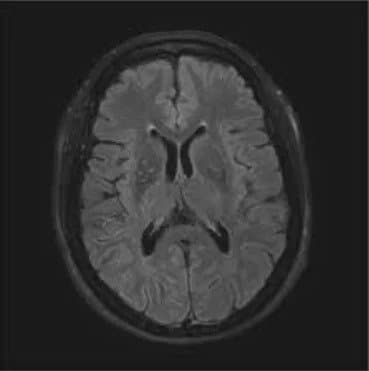
MRI scan of the brain
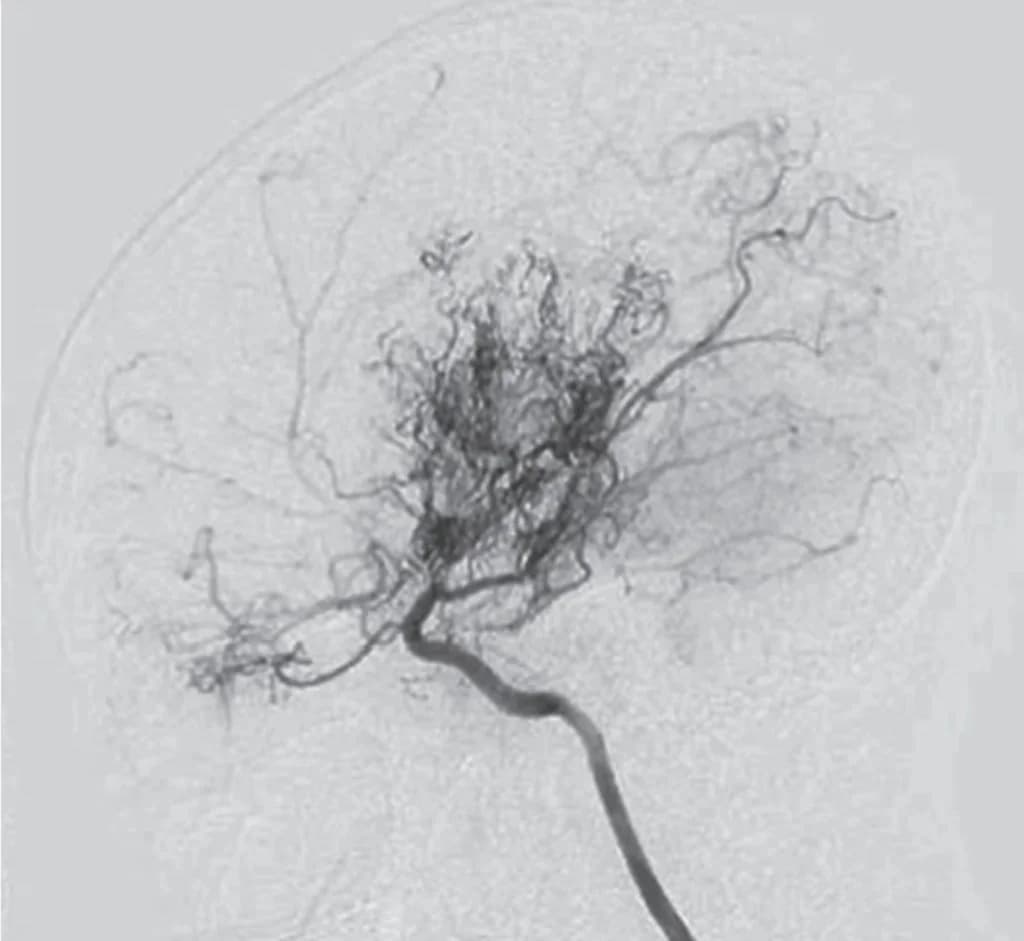
Digital Subtraction Angiogram (DSA) of the brain
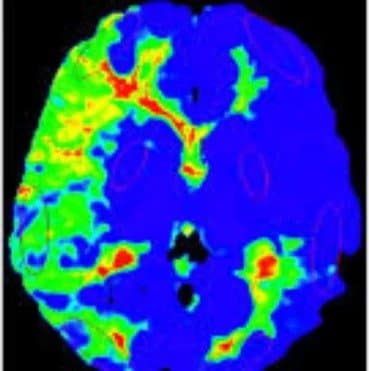
Special studies: MR Perfusion imaging
Moyamoya angiopathy management and treatment
Moyamoya angiopathy is a rare disease. A delay in diagnosis could lead to poor outcomes of treatment.It is important to secure the correct diagnosis at the earliest.
Patients are advised to remain well hydrated.
Avoid over-exertion and sweating.
Keep child calm.
Avoid action sports like swimming
Avoid over-exertion induced rapid and deep breathing.
Avoid spicy foods.
Maintain a diary of events, blood pressure recordings and fluid chart.
Medications such as blood thinners (Aspirin and Clopidogrel) and Cilastazol have limited benefit in Moyamoya angiopathy.
Revascularisation surgery for Moyamoya angiopathy
Early revascularization surgery is beneficial.
There are two types of surgery advocated in Moyamoya angiopathy.
Direct revascularization surgery (Brain bypass surgery)
A tiny blood vessel from the scalp is harvested and surgically connected to a blood vessel in the brain. This surgery allows blood to bypass the obstruction in the internal carotid artery and reach the brain. This technically demanding surgery is always done in combination with the indirect revascularization surgery (below).
Indirect revascularization surgery
Tissues in the vicinity of the brain such as the muscle (temporalis muscle), dura (covering membrane of the brain) and galea (scalp tissue) are surgically attached to the brain surface. New blood vessels sprout from these tissues to supply the oxygen-starved brain.
Our Professional Team
Prof.Dr B. Jayanand Sudhir
Professor Dr B. Jayanand Sudhir has over 16 years of experience in Neurosurgery with over 14 years of experience in treating Moyamoya angiopathy. He has obtained training for brain bypass surgery from SCTIMST, Trivandrum, Hokkaido University Hospital and Teishinkai hospital in Sapporo, Japan.
Dr B. Jayanand Sudhir is currently Senior Consultant Neurosurgeon at Yashoda Hospitals, Hyderabad.
Dr Vamshi Reddy P
Associate Consultant
Dr. Vamshi Reddy P. completed his neurosurgical training at SCTIMST, Trivandrum, and currently serves as an Associate Consultant.
Consultation for Moyamoya angiopathy is available at
FAQs
Moyamoya disease is a rare and progressive disorder in which the major blood vessels supplying the brain gradually narrow or become blocked. This leads to reduced blood flow and increases the risk of stroke due to blockage of blood flow or bleeding in the brain.
The exact cause remains unknown. The cause for Moyamoya could be multifactorial – Infection, Inflammation, Toxins, Radiation and Genetic factors.The disease has been referred to as Moya Moya disease, Moyamoya disease, Moyamoya angiopathy, Moyamoya syndrome.
Traditionally, Moyamoya was classified as those occurring independently (primary Moyamoya disease) or in association with other conditions such as genetic disorders, blood diseases, or neurological conditions (secondary Moyamoya syndrome).
In 2021, Dr Jayanand Sudhir published the Mechano-biological theory of Moyamoya and proposed the term Moyamoya angiopathy, which includes Moyamoya disease and Moyamoya syndrome. The clinical symptoms and treatment of Moyamoya disease and Moyamoya syndrome are the same.
Common symptoms include recurrent strokes or transient ischemic attacks (TIAs), limb weakness, seizures, headaches, speech or vision disturbances, and cognitive impairment. Symptoms may vary between children and adults. Transient ischemic attacks are minor strokes from which full recovery occurs after a short time. This is the reason for a delay in diagnosis or misdiagnosis, particularly in children.
Diagnosis is made using imaging studies such as MRI, MR Angiography, CT scans, and cerebral angiography, which evaluate blood flow and detect narrowing of brain vessels with formation of collaterals appearing as ‘Puff Of Smoke’. Special MRI scans are used to understand the blood flow to the brain.
Surgical revascularization is the most effective treatment. It restores blood flow to the brain and significantly lowers the risk of future strokes and haemorrhage.
Medical management with drugs such as Aspirin, Clopidogrel and Cilostazol have limited benefit.
When performed by experienced cerebrovascular neurosurgeons, revascularization surgery for Moyamoya disease is generally safe and has a high success rate in preventing further neurological complications.
Hospital recovery typically takes around 5–7 days. Most patients return to normal activities within 4–6 weeks, with continued improvement over the following months.
There is no definitive cure, but surgical treatment effectively manages the condition by improving blood supply and reducing the risk of future stroke.
A genetic component may be present in some cases, particularly in children, although many patients do not have a family history.However, Familial occurrence is extremely rare. Moyamoya angiopathy has multifactorial aetiology and the exact cause is not known so far.
Early diagnosis and timely intervention help prevent recurrent strokes, permanent brain injury, and long-term disability, ultimately improving outcomes and quality of life. Surgery has limited role after the occurrence of major stroke and permanent deficits such as limb weakness and loss of speech.
Moyamoya is not a immediate life threatening disease, but can significantly decrease the functional outcomes on long term, if left untreated. Life expectancy in Moyamoya is similar to general population if treated promptly.
There are no diet restrictions in Moyamoya, However patients are advised to remain well hydrated.